Twelve Hours, Zero Bathroom Breaks: Decoding the Turkish Wedding DJ's Marathon Method
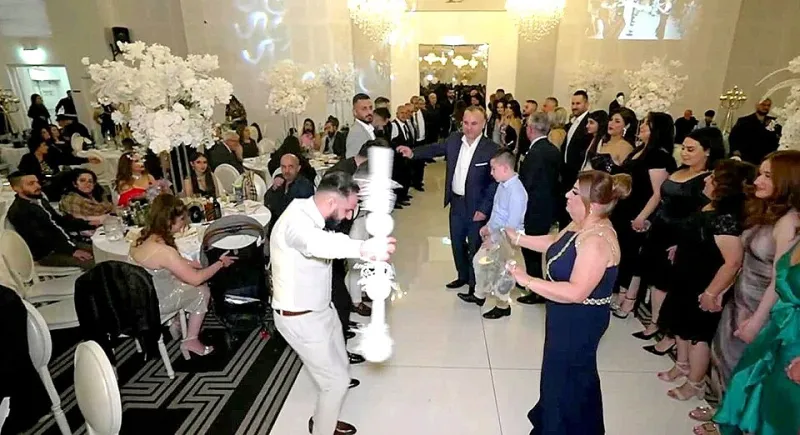
Photo: Yucalyptus, CC0, via Wikimedia Commons
Somewhere in New Jersey right now, a wedding DJ is wrapping up at 11 p.m. sharp, packing his laptop before the cake is even cut. Somewhere in Ankara, a wedding DJ is three hours into a set that won't end until sunrise, and he hasn't even touched the slow-build material yet.
We streamed a full weekend of Turkish wedding classics on Radyo Odtü's party block last month — the halay openers, the pop crossovers, the arabesk deep cuts — and somewhere around hour nine of the replay, it hit us: this isn't just music programming. This is event architecture. And American party planners, who are constantly fighting the 10:30 p.m. exodus, might want to take notes.
The Long Game Is the Whole Game
The first thing you notice about a Turkish wedding DJ set is that it refuses to peak early. Where an American DJ might drop the biggest banger in the first ninety minutes while everyone's sober and the photo booth line is short, the Turkish approach treats the night like a slow-burning fuse.
The early hours belong to the elders. Think gentle 9/8 rhythms, songs your grandmother can sway to while seated, tracks that honor the fact that the people who paid for this wedding get the first dances. It's not filler — it's diplomacy. By the time the tempo climbs, every generation has been personally acknowledged, which means nobody leaves early out of spite.
American events could learn a lot here. The 10:30 p.m. exodus happens partly because anyone over fifty has been served the same playlist as the groomsmen all night. Segment your crowd. Respect the timeline of your guests, not just the algorithm's.
The Çkekuralım Moment: Patience as a Flex
Every Turkish wedding has what we'll call the slow-build stretch — the long, almost teasing accumulation of mid-tempo tracks that makes the eventual explosion feel earned rather than scheduled. The crowd can feel the set breathing. Nobody's checking their phone because the night itself has a pulse.
The lesson for US planners: stop front-loading your highlights. If the first hour is your best hour, the last three hours are a slow leak. Save the moment everyone's waiting for until the crowd has collectively decided they're not going anywhere. The difference between a good party and a legendary one is often just sequencing.
The Aunt Clause: Every Request Gets Its Moment
Here's a rule written nowhere and enforced everywhere: at some point in the night, an aunt — every Turkish wedding has at least one, and she knows her power — will demand a specific arabesk classic. Not a suggestion. A demand. And the DJ plays it.
Not because he's scared (though, honestly, maybe a little), but because the request economy of a Turkish wedding is understood by everyone: the dance floor is a shared parliament, not a curated brand experience. When Aunt Semiha gets her three minutes of heartbreak-laden arabesk, she stays until dawn, and she brings twelve cousins with her.
American DJs, take note: the open-request portion of your night isn't a liability, it's a retention strategy. The person who hears 'their' song doesn't just stay — they become emotionally invested in the event's success. That cousin who requested it? Now she's your hype person for the next two hours, free of charge.
Endurance Is a Feature, Not a Bug
Twelve hours sounds unhinged until you understand the structure. Turkish wedding sets are built in movements — the ceremonial openers, the folk-dance block where half the guests form a circle and the other half film it, the pop hour for the twenty-somethings, the arabesk catharsis, and the final stretch where discipline breaks down and it's just whoever's left, dancing badly and loving it.
It's a marathon broken into sprints, with built-in recovery valleys where people eat, drink çay, and argue about whether the DJ should play one more slow one. (He should not. He knows this. Everyone knows this.)
If you're planning a long American event — a wedding, a festival afterparty, a company retreat that dares to run past dinner — build in those valleys on purpose. People don't actually want wall-to-wall intensity. They want rhythm: peaks, plateaus, and the strategic snack break that makes the next peak hit harder.
Your Homework: Listen Like a Planner
You don't need to book a flight to Ankara to study this. Queue up a Turkish wedding classics playlist, or catch our weekend party block on Radyo Odtü, and listen the way an event planner listens: not for the songs, but for the transitions. Notice how long the DJ waits. Notice who he's playing for at each hour. Notice that the biggest singalong of the night usually arrives when the crowd, not the schedule, decides it's time.
American parties end when the DJ stops. Turkish parties end when the last aunt sits down — and she decides when that is.
That's not a music theory. That's a business model.