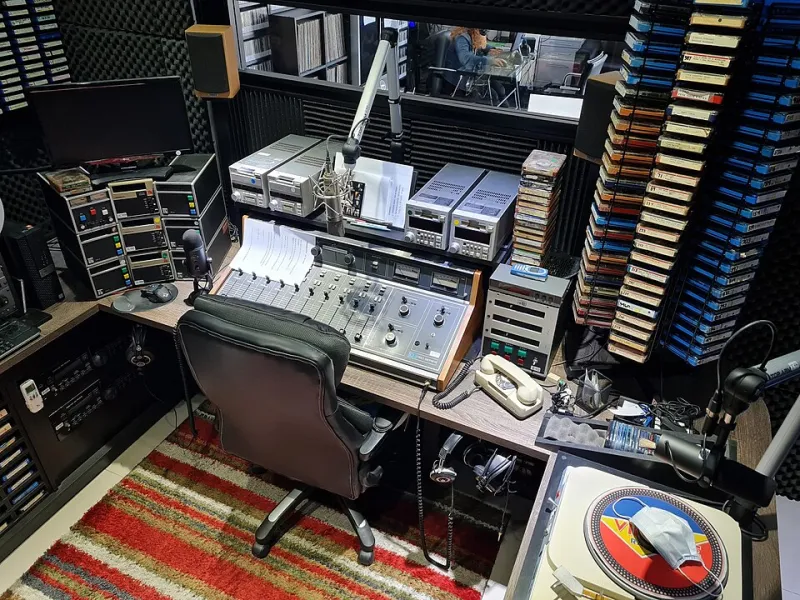
Rain 'Like an Old Friend': The Turkish Weather Report That Reads Like a Breakup Text

Photo: Infrogmation of New Orleans, CC BY-SA 4.0, via Wikimedia Commons
There's a moment that happens on Turkish radio every single day that would make an American meteorologist physically uncomfortable.
The host clears their throat, lets a beat of music fade, and instead of saying "scattered showers expected overnight with lows around 11 degrees Celsius," they say something closer to: "Yağmur yine geldi, dost gibi kapıyı çaldı." The rain came again — knocked on the door like an old friend.
That's the forecast. That's the whole forecast. And somehow, it works.
The Forecast as a Monologue
If you've never heard a Turkish weather segment, imagine a weather report written by someone who just went through a breakup and is processing it live on air. Rain isn't precipitation; it's gözyaşı — tears, usually the sky's, sometimes yours. Fog isn't reduced visibility; it's the city hiding from itself. A cold front rolling in from the Balkans isn't a meteorological event, it's soğuk bir haber — cold news, delivered with the same tone you'd use to tell someone their ex got engaged.
This isn't accidental. Turkish radio culture has always treated the weather as emotional infrastructure. In a country where a single broadcast can reach farmers in the Aegean, students in Ankara, and taxi drivers in Istanbul, the forecast is one of the few things everyone shares. So hosts treat it less like data delivery and more like a daily check-in with the whole country. How is everyone feeling? Well — the sky feels like this today, and honestly, so should you.
The poetry isn't decoration. It's the point.
Meanwhile, in America
Now contrast that with the typical US radio weather break. You know the one. It's 22 seconds long, sponsored by a local HVAC company, and delivered at a pace that suggests the host is being timed: "Sunny and 74 today, chance of rain Thursday, back to you in the studio."
Efficient? Absolutely. Memorable? Not even slightly.
There's a reason the phrase "weather on the eights" exists — American radio treats forecasts like train schedules, something to check and immediately forget. The information is accurate and completely interchangeable with your phone's lock screen. Nobody tunes in for it. Nobody calls a friend and says, "You have to hear what the weather guy said."
Turkish listeners absolutely do that.
Translation Notes for the Curious
A quick field guide to the genre, for those following along at home:
- "Yağmur, hasret gibi geldi" — The rain arrived like longing. (Usage note: deploy only when the rain has, in fact, been gone a while.)
- "Rüzgar eski hesapları kapattı" — The wind closed old accounts. Meaning: a cold front blew through and possibly settled some personal scores in the process.
- "Kar, şehre sessizce bir mektup gibi düştü" — Snow fell on the city like a quiet letter. Reserved for the first snowfall of the year, and treated with appropriate ceremony.
The trick, if you're translating for an American audience, is resisting the urge to explain the metaphors. The weather report isn't saying the rain is like an old friend for literary credit. It genuinely believes the rain has been meaning to drop by.
What American Radio Could Steal
Here's the argument, and we'll make it plainly: the US weather break is a relic of a time when radio was the fastest way to get information. That time is over. Your phone updates faster than any host can talk. The only reason to hear a forecast out loud is the delivery — the human, the tone, the sense that someone thought about your Tuesday.
So American community and campus radio hosts, consider a few experiments:
Give the weather a personality. Not a mascot — a mood. Is today's forecast melancholy? Restless? Secretly hopeful? Say so.
Connect it to a life. "Rain's coming Thursday, which is either bad news for your cookout or a great excuse to finally stay in and finish that album." One sentence of humanity beats ten seconds of dew point.
Slow down. The Turkish weather segment works partly because it takes its time. It's a small act of resistance against the day's pace. Listeners notice when you're not rushing them.
Repeat a line. Turkish hosts have signature weather phrases listeners wait for. Build your own. Ritual is what radio still owns that TikTok doesn't.
The Sky, but Make It Personal
None of this means American hosts need to start weeping about cumulus clouds tomorrow. But there's a middle ground between "sunny and 74" and a full Anatolian soliloquy, and it starts with one simple question: if a robot can read your forecast, why are you reading it?
Turkish radio figured out decades ago that the forecast was never really about the weather. It's about standing at the window of a shared day and describing what you see — beautifully, if possible — to everyone else in the room.
The rain will knock on the door either way. The question is whether anyone's home to describe it.