"For Ayşe From the 4th Floor": How Turkish Radio Dedications Invented the Shoutout
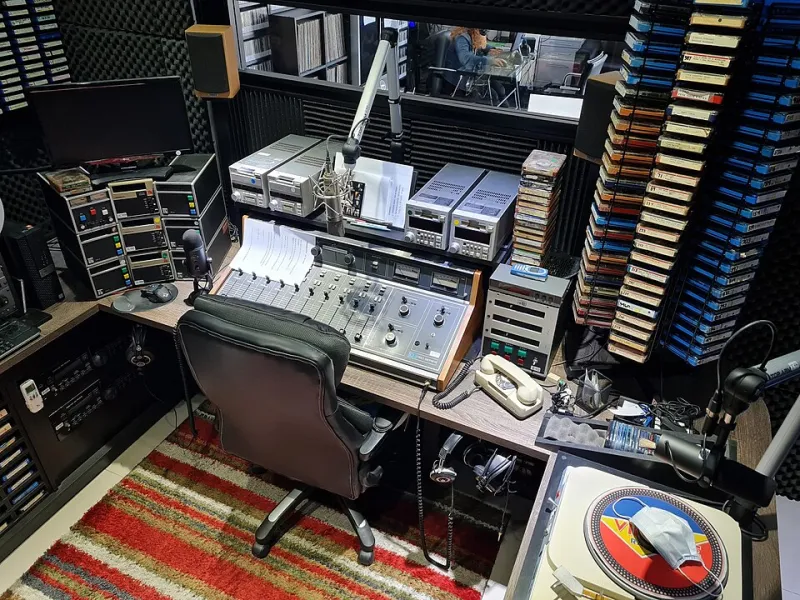
Photo: AmandaPenida, CC BY-SA 4.0, via Wikimedia Commons
Somewhere in Queens, a man named Mehmet is waiting on hold. He's been holding for eleven minutes. He does not mind. When the host finally picks up, Mehmet will not ask for a song right away. First, he'll greet the host, greet the audience, greet his mother in İzmir, and then — after a backstory involving a cousin's engagement, a workplace dispute, and the weather in both hemispheres — he'll request a song "for Ayşe from the 4th floor."
If you grew up around Turkish radio, none of this is unusual. If you didn't, welcome to the request line: the original social network, running on copper wire and patience since long before your first Instagram mention.
The Dedication as a Public Act
American radio had dedications too, of course. But somewhere along the way, the American version got compressed — a quick "this one goes out to Sarah, hope you're doing well" between songs. Turkish radio never got that memo. The dedication remained a performance, a small theatrical production with a cast (the caller), a narrator (the host), and an audience (an entire city, possibly an entire diaspora).
The structure was almost folkloric. You identified yourself by location in a way that suggested a whole building full of people listening: "from the 4th floor," "from the corner bakery," "from the last house before the highway." You named the dedicatee with the precision of a legal document. And then came the story — because the song alone was never enough. The song was the gift; the story was the wrapping paper.
Before the Algorithm, There Was the Producer
Here's the thing today's parasocial landscape gets backwards: on Turkish request-line radio, the listener reached the broadcast, not the other way around. No algorithm decided whether your voice got heard. You called, you waited, you got your moment. The gatekeeper was a producer with a coffee-stained notebook and a strict sense of who'd been on hold longest.
Compare that to the modern shoutout economy. You tag a celebrity into the void. You comment on a podcast episode. You leave a voicemail that may or may not make the air. The interaction is real, but the feedback loop is broken — you shout, and the internet decides if anyone hears you. The request line reversed that. It was a shoutout with a guaranteed return signal: the host says your name, the song plays, and someone, somewhere, hears it.
That guaranteed acknowledgment is what a lot of digital interaction is still chasing. We just call it "engagement" now.
Why Turkish-Americans Still Call In
Ask around at Turkish-American community gatherings — or just listen to the phones light up during our evening request hours — and you'll notice something: the callers aren't only requesting songs. They're calling to say hello. Full stop. "I just wanted to say merhaba to everyone from New Jersey." That's the entire message.
It sounds quaint until you think about what it replaces. For a truck driver outside Cleveland, a grad student in Boston, a grandmother in Paterson, the call-in is a low-stakes, high-warmth way of announcing I exist, I'm here, I'm part of this. It's the diaspora equivalent of leaning over the back fence. The radio becomes the fence.
And unlike a Facebook post, the call comes with a human on the other end who will respond — usually with a follow-up question about where you're from originally, which is how half of our best on-air conversations start.
The Rules of the Request Line (Unofficial, But Enforced)
Every culture's call-in etiquette has its bylaws. The Turkish version, as observed over decades of airtime:
- The greeting cascade is mandatory. Host, audience, family, hometown. Skipping steps is considered rude.
- The backstory must justify the song. You cannot request an orchestral arabesk for a coworker's birthday. There must be stakes.
- The dedicatee is often listening. This is the dramatic engine of the whole format. Ayşe from the 4th floor might be in the next room. Choose your words accordingly.
- The host is a co-author, not a switchboard. The best hosts riff, tease gently, and steer the story somewhere entertaining without ever stealing it.
A Shoutout You Can Actually Hold Onto
There's a reason people still remember dedications they heard twenty years ago — the song their uncle requested for their aunt, the caller who proposed on air and got a yes. A digital mention scrolls away in seconds. A dedication lives inside a song, and the song lives in memory, and memory is the one platform nobody can redesign.
So the next time you're tempted to tag someone in a story and hope they see it, consider the older technology. Call the request line. Tell the story. Ask for the song "for Ayşe from the 4th floor."
She's listening. She always was.
Our evening request line is open every weeknight — story length strictly encouraged, not enforced.