Skip the Coffee Run: Why Turkish Campus Mornings Hit Different
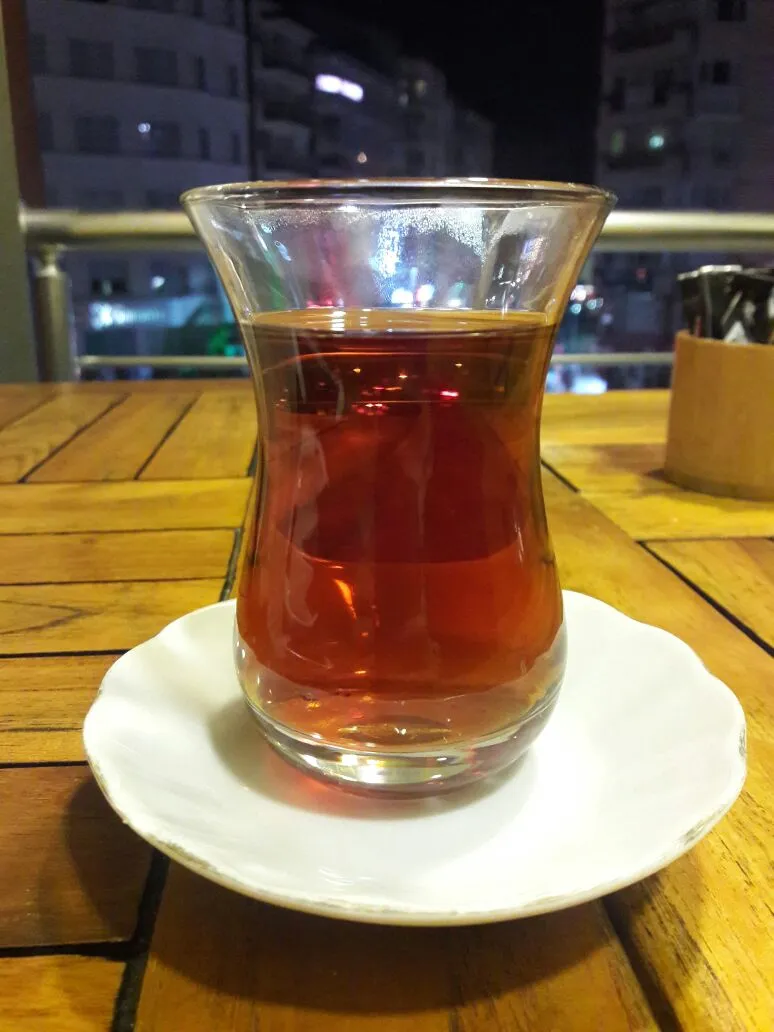
Photo: Lemon tart, CC0, via Wikimedia Commons
If your morning routine involves a drive-time DJ reading traffic reports between two ads for mattress stores, we have news for you: mornings on the radio can be a lot more fun.
Here at Radyo Odtü, our morning programming runs on a completely different frequency — literally and culturally. Born out of the Middle East Technical University (ODTÜ) tradition in Ankara, our mornings carry a set of customs that surprise just about every American listener who stumbles onto our stream. Pour yourself a coffee (or better yet, a tulip-shaped glass of çay) and check out what you've been missing.
1. The Morning Çay Ritual
In American radio, the morning show runs on coffee — big, industrial thermoses of it. In Turkish radio culture, it's çay (tea), and it's not just fuel; it's a social contract.
On our morning shows, hosts and guests drink tea on air, and you can often hear the clink of little glasses and the clatter of the simit bag (that's a sesame-crusted Turkish bread ring, basically the world's superior bagel). Listeners even text in their own tea orders. It sounds small, but it sets a tone: this isn't a show talking at you, it's a table with an extra chair pulled up for whoever's listening.
2. Live Request Dedications — With Actual Stories
American radio does dedications, sure, but they're usually a quick "this one goes out to Jessica." On Turkish campus mornings, a dedication is a whole segment.
Callers don't just name a song — they tell the story behind it. A student requesting Sezen Aksu for her roommate who stayed up all night helping her study. A father across the ocean requesting a classic Barış Manço track for his daughter's first day of classes. The host unpacks it, jokes about it, maybe sings a line off-key, and only then does the song drop. It turns a playlist into a community bulletin board.
3. Spontaneous Folk Music Jams
This is the one that stuns first-time American listeners. Somewhere between the 8 a.m. and 9 a.m. blocks, a folk song — maybe an Anatolian classic or a lively halay tune — comes on, and the studio stops pretending to be professional.
Hosts clap along. Whoever plays an instrument gets roped in. The bağlama (a long-necked Turkish lute) makes surprise appearances when a musician friend wanders by the studio. There's no rundown sheet that predicts this. It's the campus radio spirit at its purest: live, unpolished, and completely unbothered by the clock.
4. The Weather Report You Can Argue With
Every Turkish morning show has a weather segment, but on campus radio it's less "forecast" and more "group chat debate." Hosts argue about whether Ankara is actually going to get snow, listeners call in to report the sky from their dorm windows, and someone inevitably blames their mood on the wind — a very Turkish national pastime.
For our US audience, think of it as the weather segment from your local news, except everyone has opinions and nobody's reading from a teleprompter.
5. The 9 A.M. Sign-Off Song
American drive-time shows tend to dissolve into syndicated programming. Turkish campus mornings end with a ritual: a familiar closing track that regulars set their watches by. It's a soft landing into the rest of the day, a signal that the community made it through another morning together.
Why This Matters for US Listeners
If you're tuning in from Chicago, Austin, or Seattle, these traditions might feel unfamiliar at first — but stick around for a week and you'll notice something. American morning radio optimizes for commute efficiency. Turkish campus mornings optimize for connection.
That's not to say one is better. But if you've ever felt like your drive-time show was talking past you instead of with you, the Turkish approach might be the reset you didn't know you needed. And the best part? You don't need to speak fluent Turkish to feel the warmth — though fair warning, you'll probably pick up a few words. And a taste for çay.