Heartbreak at 3 A.M.: Why Türkiye's Overnight Radio Refuses to Die (and How to Start Your Own)
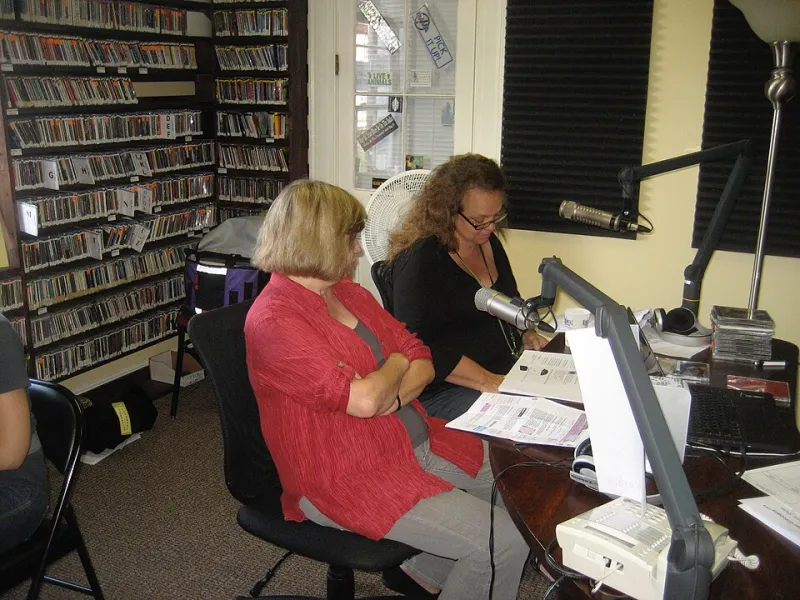
Photo: Infrogmation of New Orleans, CC BY-SA 4.0, via Wikimedia Commons
It's 3 A.M. in Ankara. Somewhere across the city, a truck driver is pulling over at a rest stop, dialing a number he's had memorized for years. When the host picks up, he doesn't say hello. He says, "Anlat bakalım" — go ahead, tell me. And for the next twenty minutes, a stranger on national radio will explain why his marriage is falling apart, while a host who has heard ten thousand versions of this story responds with equal parts folk proverb, gentle teasing, and genuine warmth.
If you've never listened to Turkish overnight radio, this scene might sound foreign. If you have, you know it's simply Tuesday.
The Night Shift Nobody in America Wanted
American overnight radio used to be a thing. Coast to Coast AM still survives, and a handful of syndicated love-advice shows limp along, but the golden era of local hosts talking to insomniacs has mostly evaporated. Consolidation gutted it. Automation replaced it. These days, if you flip on the radio at 3 A.M. in most US markets, you'll get a voice-tracking DJ who recorded the show at 4 P.M., a network feed, or an infomercial for a mattress.
Türkiye went the other direction. Overnight slots there aren't punishment shifts for junior hosts — they're often the most beloved hours on the schedule. Shows built around live call-ins, dedicated song requests, and slow, late-night conversation have thrived for decades. Part of it is practical: Turkey's geography spans two time zones of habits, shift workers are everywhere, and long-distance trucking culture means a huge audience is literally awake and rolling through the night. Part of it is cultural: the radio host as informal counselor, the on-air dedication as a love language, the shared understanding that loneliness at 3 A.M. is a universal condition worth addressing out loud.
There's a specific rhythm to these shows. A listener calls in, heartbroken over someone who left for Istanbul and never called back. The host listens. Then comes the verdict — sometimes a folktale, sometimes a brutally honest "kanka, let it go," always a song chosen to match the mood. The song is the prescription. The caller hangs up feeling seen, and a few thousand other insomniacs feel it too.
Why the Format Actually Works at Night
Here's what American programmers tend to miss: overnight radio isn't about content, it's about company. Daytime radio competes with podcasts, playlists, and TikTok. But at 3 A.M., the competition collapses. The person listening is awake because they have to be, or because they can't sleep, and what they want isn't production value. It's a human voice that's awake with them.
Turkish overnight hosts understand this instinctively. They talk slower. They leave silences in. They treat a caller's story about a failed exam with the same gravity as a divorce. And crucially, they never rush — the whole aesthetic of the overnight show is anti-clock. Nobody's counting down to the top of the hour. The night is long, and so is the conversation.
There's also a trust factor. In a culture where calling a radio host to discuss your love life isn't considered strange, the call-in screen is low. Nobody feels foolish. That normalization took decades to build in Türkiye, and it's the piece that can't be faked — but it can be started.
The Dorm Room Revival
Which brings us to you. Because if there's one thing we've learned watching campus and community radio in the US, it's that the overnight format is uniquely suited to a revival by people with no budget, no license, and a decent internet connection.
Online streaming and platforms like Discord, YouTube Live, and low-cost streaming hosts have made it absurdly easy to broadcast. The Turkish model translates shockingly well. A few practical tips, drawn from how the Ankara pros do it:
- Pick a consistent hour and guard it. The magic of the overnight show is reliability. Every Tuesday, 2 to 4 A.M., no exceptions. Your five listeners need to know you'll be there.
- Let the phone ring. Take real call-ins or voice messages. A story from a stranger at 3 A.M. is worth more than any playlist.
- Master the dedication. Ask listeners to send song requests with a message attached. Read the message, play the song. It's the single most portable ritual in Turkish radio.
- Don't fear the silence. Let a song breathe. Let a caller think. Overnight radio is a slow meal.
- Bring the folk wisdom. You don't need to quote proverbs, but you do need a point of view — a voice that sounds like it has lived a little and will tell you the truth kindly.
Start small. A dorm broadcast with three listeners and one heartbroken caller is not a failed experiment; it's exactly how the greats started. The night shift has always belonged to the beginners and the true believers.
Somebody Should Be Awake
The reason Türkiye's overnight radio survives isn't mystery or magic. It's a simple cultural decision: somebody should be awake with the people who can't sleep. American radio largely decided the opposite, and the night went quiet.
It doesn't have to stay that way. The tools are cheap, the format is proven, and the audience — gig workers, students, new parents, the heartbroken — is still out there, wide awake, waiting for a voice.
Somebody should be awake. It might as well be you.