Breath, Diction, and a Very Stern Instructor: American Podcasters Take the Turkish 'Ses Testi'
American podcasters love to talk about "finding their voice." In Türkiye, radio hosts have to actually pass a test to prove they have one.
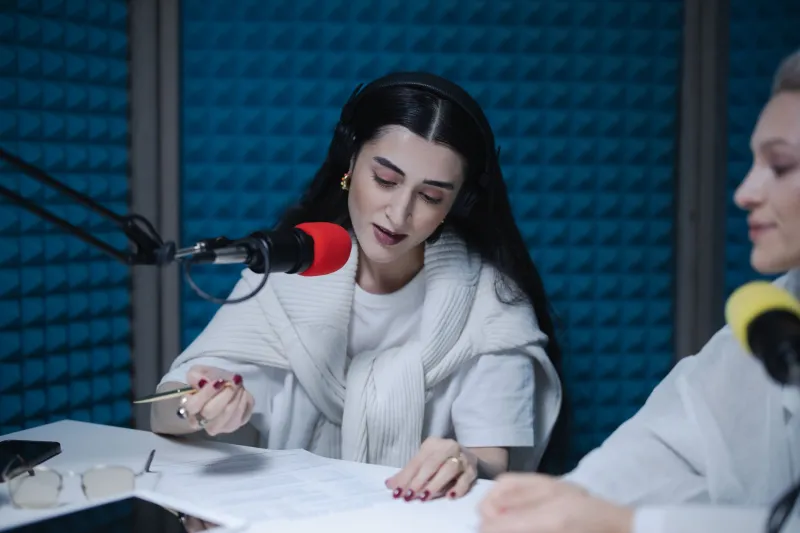
It's called the ses testi — literally, the voice test — and it's a rite of passage at Turkish stations from TRT down to the smallest campus broadcasters. No mic time, no on-air shifts, not even reading the traffic report until you've stood in front of a senior instructor and demonstrated that your breath, your diction, and your nerves can survive a live broadcast. Last month, we brought three American podcast creators to Ankara to see if they could survive it.
The Gatekeeper of the Airwaves
Here's the thing most American audio folks don't know: Turkish radio has historically treated the human voice as a trainable instrument, not a personality trait. Before a trainee ever goes live, they work through a curriculum that looks closer to a conservatory than a content strategy meeting.
Our three volunteers — a true crime host from Chicago, a sports podcaster from Austin, and a lifestyle creator from Portland — were handed over to a veteran instructor whose name we'll protect, but whose sigh could curdle a condenser mic.
Day one began not with a microphone, but with a straw. Breathing exercises. Diaphragm work. The Americans, all of whom record in closets padded with moving blankets, realized within twenty minutes that they'd been "mic-ing" their way through careers without ever learning to breathe on purpose.
The Drills That Break You
The Turkish vocal bootcamp isn't subtle. It's a gauntlet:
- Tongue twisters in two languages. Turkish diction drills are brutal enough, but the instructor made them recite equivalents in English until the Portland host's "red leather, yellow leather" collapsed into gibberish.
- Breath control ladders. Read a sentence, then a paragraph, then a full passage — on a single inhale. The Chicago true crime host, used to dramatic pauses and re-takes, discovered she'd been editing around her own weak lungs.
- The long-form "deneme" reading. The dreaded final exam: a cold read of a dense news passage, live, no cuts, while the instructor frowns from the back of the room.
The Austin sports podcaster lasted four sentences into his deneme before getting stopped. "Your voice is performing," the instructor told him. "It should be serving." He said it wrecked him more than any one-star review ever had.
What the Test Actually Measures
Sitting in on the sessions, what struck us wasn't the rigor — it was the philosophy underneath it. The ses testi isn't checking whether you sound like a "radio voice." There's no deep-voiced movie-trailer standard here. It's checking whether you can be understood, consistently, at length, without exhausting your listener or yourself.
That's a radically different bar than American podcasting, where a decent mic and a good story often count as qualification. Turkish radio assumes you'll be talking to strangers at six in the morning, doing dedications, reading weather, filling dead air with warmth — and that none of that works if the instrument itself isn't maintained.
The Verdict
Two of our three Americans passed on their first attempt. The third — the sports host — needed a retest, which he took the next morning after a dawn of breathing drills, and passed with what the instructor grudgingly called "acceptable vowels."
But the real result came weeks later, back home. The Chicago host told us she now warms up before every recording session. The Portland creator rebuilt her whole intro around a slower, lower register she didn't know she had. And the Austin podcaster? He stopped editing his breaths out entirely. "The pauses were the story," he said. "I'd been deleting the story."
Try It Yourself
You don't need a flight to Ankara to steal this. A few takeaways any podcaster can use:
- Warm up before you record. Five minutes of humming and breathing beats forty minutes of re-takes.
- Read something hard, out loud, no stopping. A legal document, a dense article, anything that punishes lazy diction.
- Record yourself reading, then listen for effort. If you sound like you're working to sound good, you are. Fix the breath, not the filter.
Turkish radio built its intimacy — the dedications, the overnight shows, the feeling that the host is in the room with you — on a foundation of vocal discipline. American podcasting has the intimacy down. Maybe it's time we borrowed the discipline too.
Şerefe to the class of this year's ses testi. Your vowels were acceptable.